When you look at your yard, do you see how trees protect your property value? Trees as mere landscaping elements or as valuable financial assets? The truth is, mature trees significantly impact your property’s market value. From enhancing curb appeal to reducing energy costs, trees work silently to protect and boost your home’s worth. However, this green investment requires proper care to maximize returns. Let’s explore how trees safeguard your property value and why professional maintenance makes all the difference.
What You’ll Learn About Property Value And How Trees Protect Your Property Value
- How Trees Function as Financial Assets
- 5 Ways Trees Boost Property Values
- The Hidden Costs of Tree Neglect
- Essential Tree Services That Protect Value
- When to Call a Professional: Warning Signs
- Cost vs. Value: The Tree Care Investment
- How to Choose a Reputable Tree Service
- Frequently Asked Questions
Trees as Financial Assets: The Numbers Behind the Greenery
Trees aren’t just beautiful additions to your landscape—they’re appreciating assets that provide measurable returns. According to multiple property valuation studies, mature trees can increase home values by 3-15%. This translates to thousands of dollars in added value for the average homeowner.
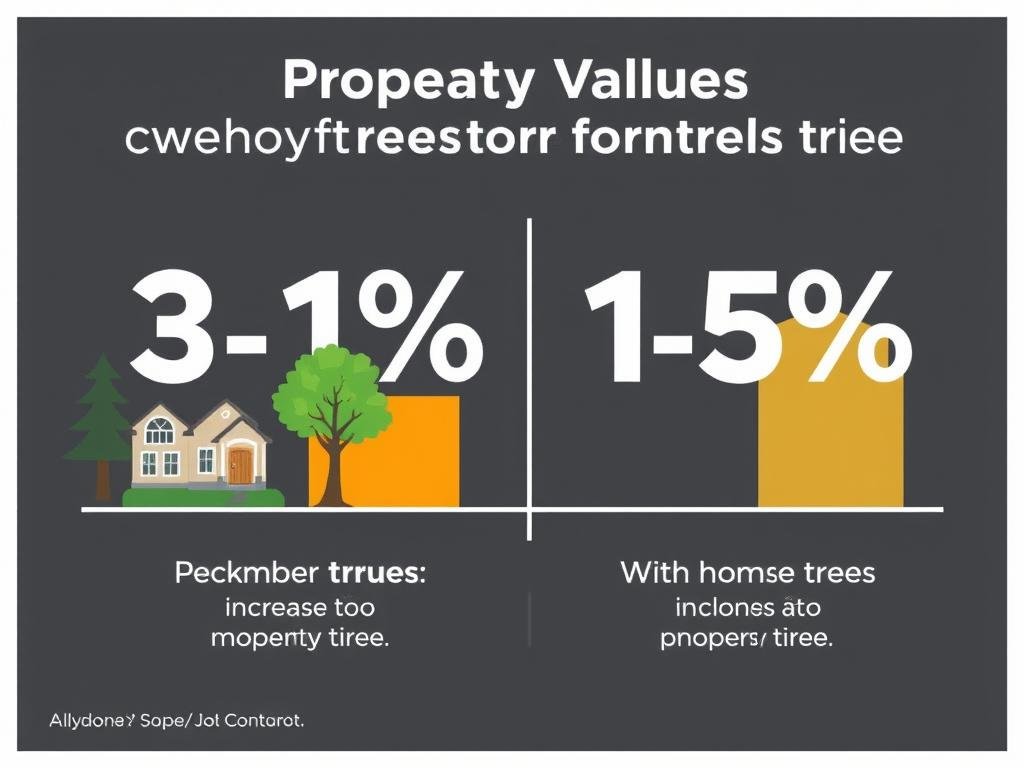
The financial benefits extend beyond simple aesthetics. Trees create what real estate professionals call “the premium effect”—properties with established trees typically sell faster and command higher prices than comparable tree-less properties. In Portland, Oregon, street trees added an average of $7,130 to home sales prices and reduced time on market by 1.7 days.
Discover Your Trees’ Value
Wondering how much your trees contribute to your property’s worth? Our certified arborists can assess your landscape’s value and identify opportunities for enhancement.
5 Ways Trees Boost Your Property Value
1. Enhanced Curb Appeal and Aesthetics
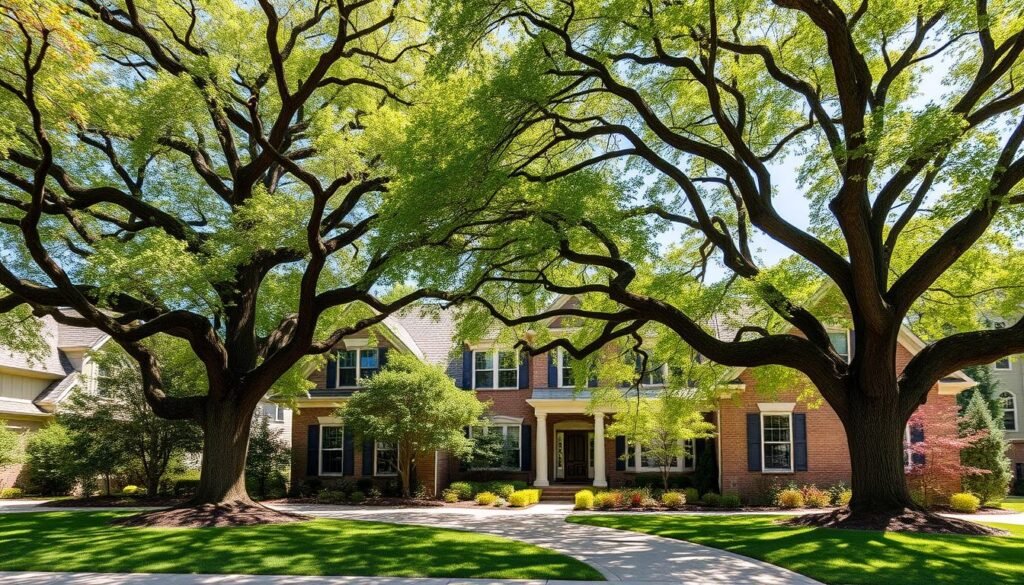
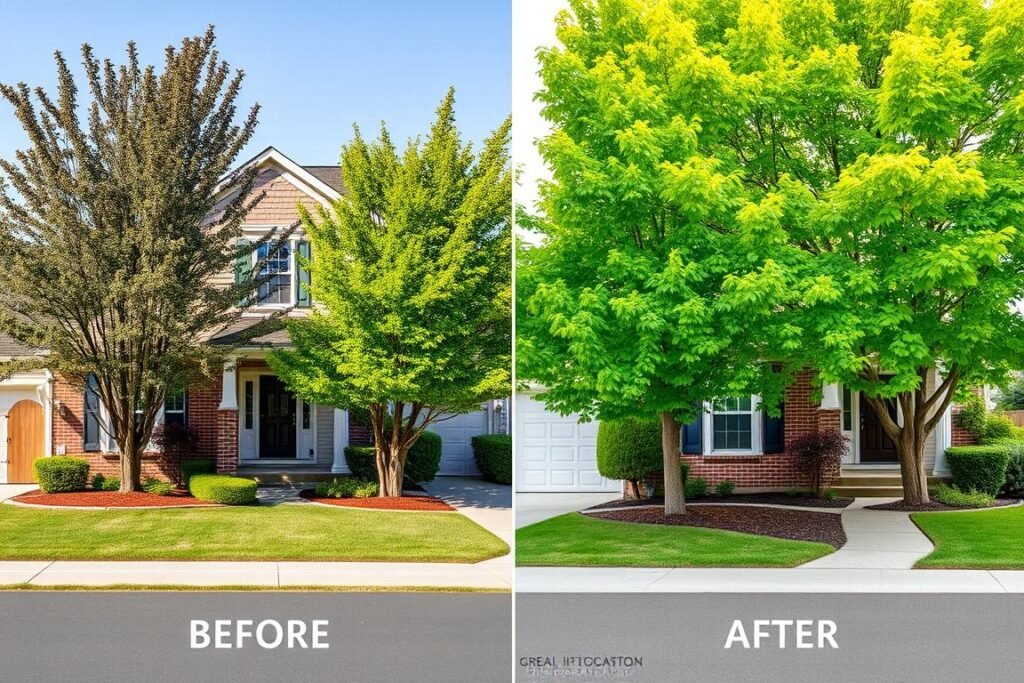
First impressions matter in real estate. Mature trees create an established, welcoming appearance that instantly elevates your property’s perceived value. Well-placed trees frame your home, create visual interest, and provide a sense of permanence that new constructions often lack. Real estate photographers often highlight properties with mature trees as they create a more appealing composition.
2. Energy Cost Reduction
Strategically placed trees provide natural climate control. According to the U.S. Department of Energy, properly positioned trees can reduce air conditioning needs by 30% and save 20-50% in heating costs. This energy efficiency is increasingly valuable to prospective buyers who factor ongoing utility expenses into their purchasing decisions.
3. Privacy and Noise Reduction
Trees create natural boundaries that enhance privacy without the institutional feel of fences or walls. They also serve as effective sound barriers, reducing traffic noise by up to 40% when properly placed. In urban and suburban settings, this acoustic buffering significantly increases property desirability and value.
4. Environmental Benefits and Market Appeal
Today’s homebuyers increasingly value environmental considerations. Trees improve air quality by filtering pollutants, reduce stormwater runoff, and support local wildlife. Properties with trees are marketed as more environmentally friendly, appealing to the growing segment of eco-conscious buyers willing to pay premium prices.
5. Outdoor Living Space Enhancement
Trees transform outdoor areas into functional living spaces. Shaded patios, tree-framed gardens, and natural play areas expand your home’s usable square footage. Real estate listings often highlight these tree-enhanced outdoor spaces as premium features that justify higher asking prices
Benefits of Professional Tree Placement
- Strategic positioning for maximum shade benefit
- Species selection based on soil conditions
- Proper spacing to prevent future structural issues
- Consideration of mature size and root systems
- Integration with existing landscape features
Risks of DIY Tree Placement
- Improper spacing causing foundation damage
- Species mismatch with climate conditions
- Interference with utility lines
- Poor placement reducing energy benefits
- Inadequate consideration of mature size
The Hidden Costs of Tree Neglect
While healthy trees add value, neglected ones can become significant liabilities. Unmaintained trees pose several risks that can actively decrease your property’s worth and marketability.
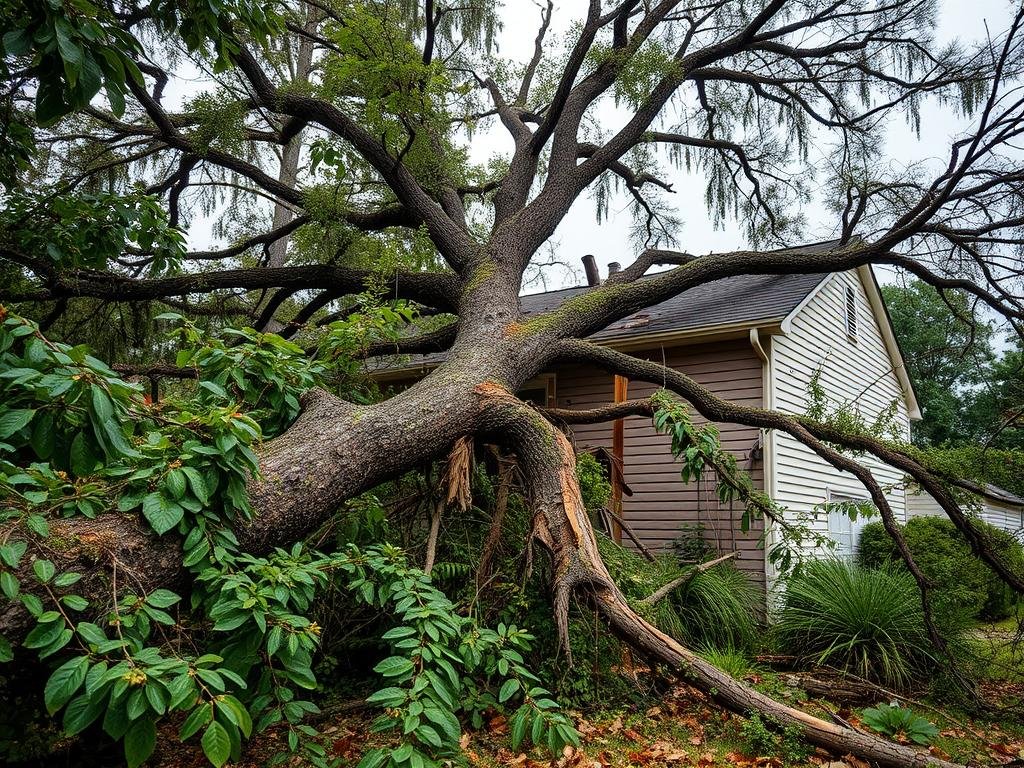
Property Damage Liability
Diseased or structurally compromised trees can fall during storms, potentially causing catastrophic damage to your home, vehicles, or neighboring properties. Beyond repair costs, these incidents often lead to insurance premium increases and potential liability claims.
Disease Spread and Tree Loss
Tree diseases spread rapidly when left untreated. What begins as a minor issue in one tree can quickly affect your entire landscape, potentially resulting in the loss of multiple valuable trees. Professional early intervention can prevent these cascading losses.
Pest Infestations
Weakened trees attract pests that can subsequently invade your home. From termites to carpenter ants, these unwelcome visitors often begin in deteriorating trees before moving to structural wood. Regular professional inspections identify and address these threats before they escalate.
Property Value Alert: Home inspectors routinely flag tree issues during pre-sale inspections. Identified problems can become negotiation points that reduce your selling price or require expensive last-minute remediation.
Essential Tree Services That Protect Property Value
Professional tree care is an investment that pays dividends through preserved and enhanced property value. These key services provide the greatest return on investment:
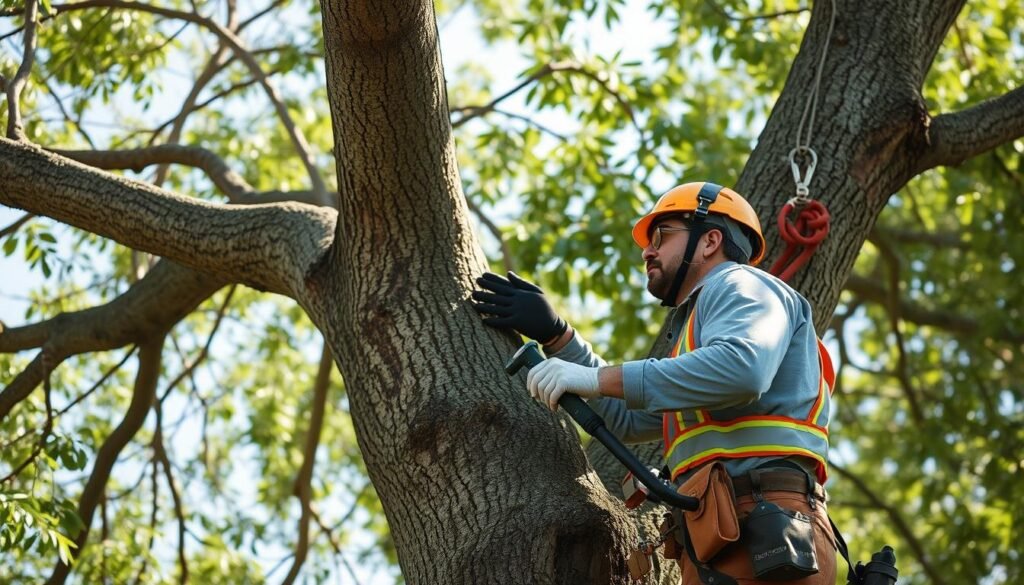
Strategic Pruning and Maintenance
Professional pruning does more than improve appearance—it strengthens structural integrity, promotes healthy growth patterns, and prevents potential hazards. Unlike DIY approaches that often damage trees, professional pruning follows arboricultural standards that preserve tree health and value.
Disease and Pest Management
Certified arborists identify early signs of disease and infestation that untrained eyes might miss. Using environmentally responsible treatments, they can often save trees that would otherwise be lost, preserving your landscape’s value and preventing the substantial costs of mature tree replacement.
Storm Preparation and Response
Professional pre-storm pruning significantly reduces damage risk by removing vulnerable branches and improving wind resistance. After storms, prompt professional assessment prevents secondary damage and addresses safety concerns that could affect property value.
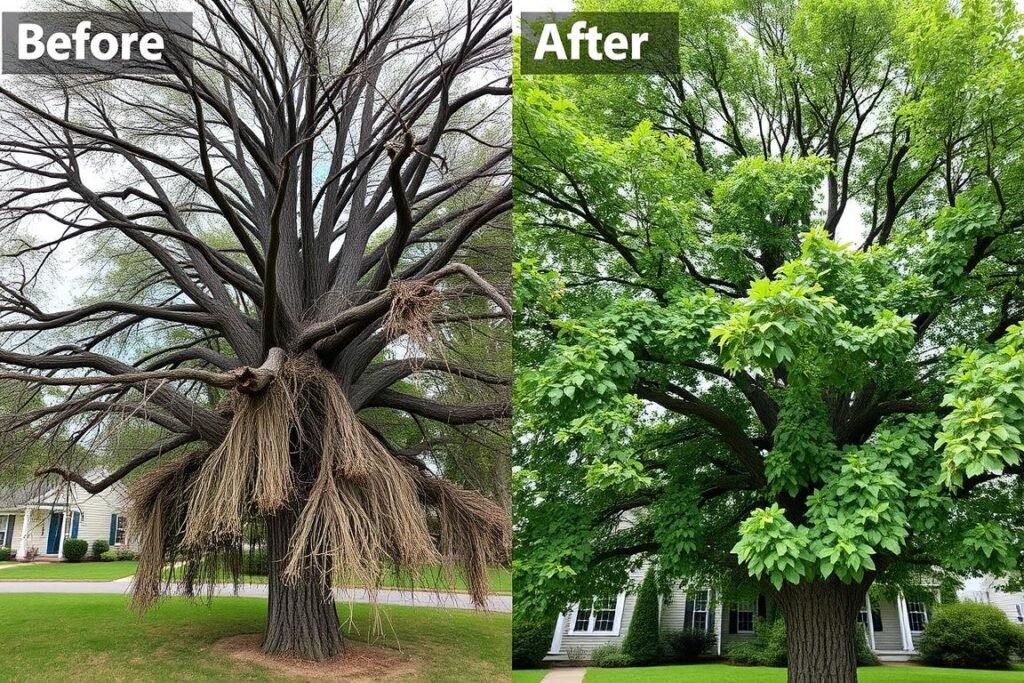
Strategic Removal and Replacement
Sometimes, removal is the most appropriate option for hazardous or inappropriate trees. Professional services ensure safe removal without property damage and can recommend strategic replacements that enhance rather than detract from value.
Protect Your Landscape Investment
Our certified arborists provide comprehensive care that preserves and enhances your property’s valuable trees.
When to Call a Professional: Warning Signs Homeowners Miss
Many tree issues develop gradually, making them easy to overlook until they become serious problems. Being proactive about these warning signs can prevent value-diminishing damage:
Structural Concerns
- Leaning trunks or sudden changes in position
- Cracks or splits in major branches or trunk
- Multiple trunks that form tight V-shapes rather than U-shapes
- Hollow areas or visible decay in the trunk
Health Indicators
- Thinning canopy or premature leaf drop
- Discolored or deformed leaves
- Fungal growth on trunk or major branches
- Excessive deadwood throughout the canopy
Environmental Factors
- Recent construction that disturbed root zones
- Changes in soil level around the base of trees
- Signs of root damage or compaction
- Trees growing too close to structures or utilities
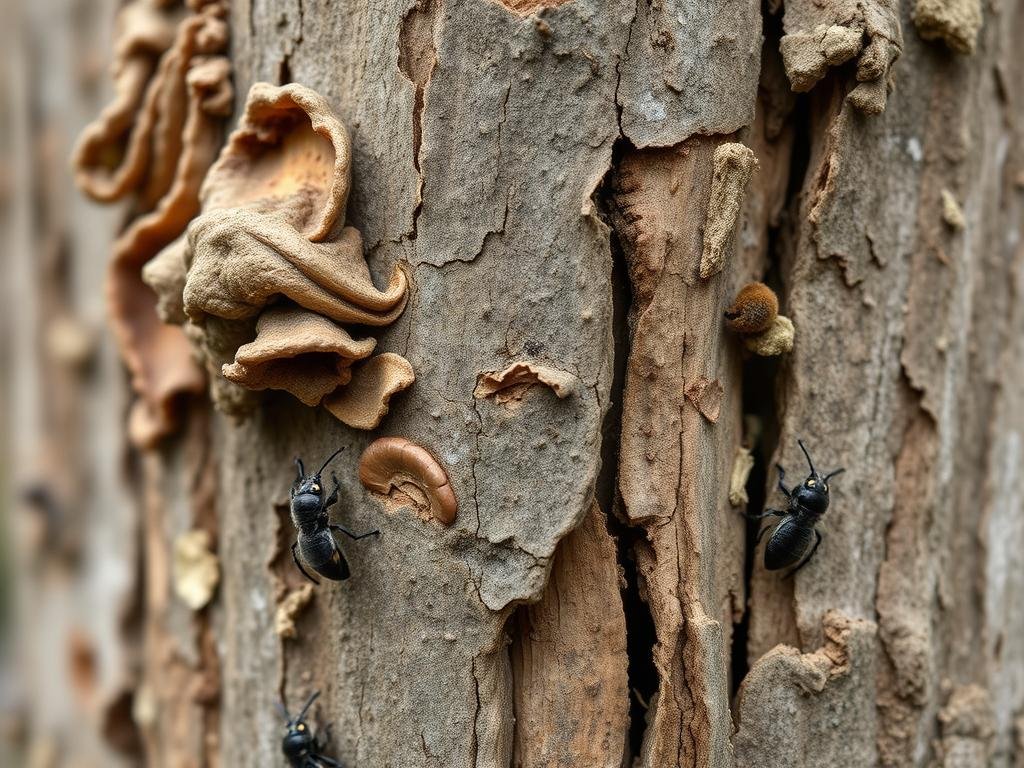
“By the time most homeowners notice tree problems, they’ve typically been developing for 1-3 years. Early professional intervention can mean the difference between a simple correction and complete tree loss.”
Cost vs. Value: The Tree Care Investment
When evaluating tree care expenses, it’s essential to consider both immediate costs and long-term value protection. Professional tree services typically represent a fraction of the value they preserve.
| Service Type | Typical Cost Range | Value Protected/Enhanced | ROI Timeframe |
| Preventative Maintenance | $300-$700 annually | $1,500-$5,000 in property value | 1-3 years |
| Disease Treatment | $400-$1,200 | $2,000-$10,000 per mature tree saved | Immediate |
| Strategic Pruning | $350-$650 per tree | $1,000-$3,000 in damage prevention | 1-2 years |
| New Tree Planting | $200-$600 per tree | $1,500-$3,000 in future value | 5-10 years |
| Emergency Removal | $750-$2,000 | $5,000-$20,000+ in potential damage | Immediate |
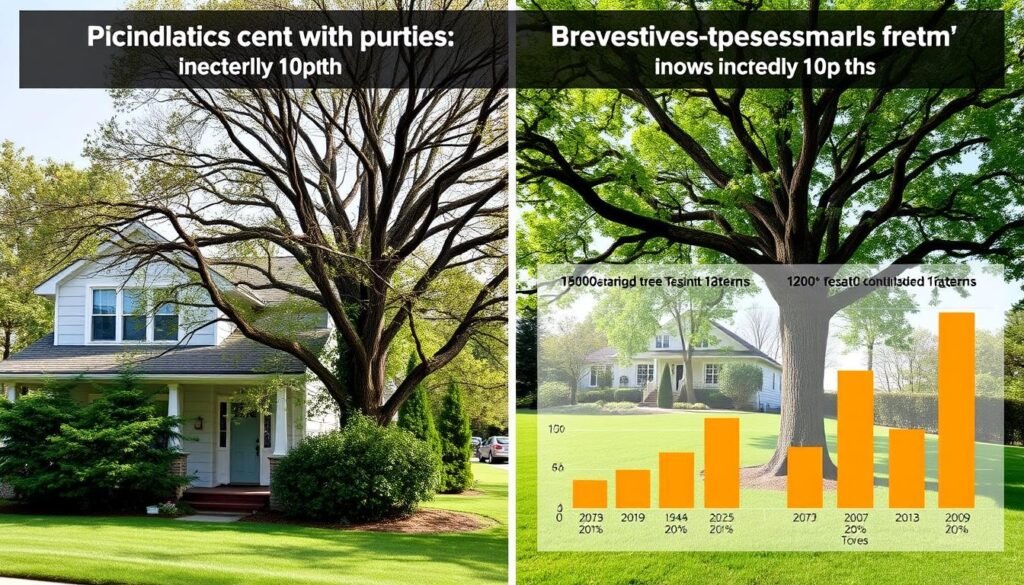
The most cost-effective approach is regular preventative care rather than reactive emergency services. Scheduled maintenance not only costs less over time but also maximizes the value-enhancing benefits of your trees while minimizing risks.
How to Choose a Reputable Tree Service
Not all tree services provide the same level of property value protection. When selecting a provider to care for your valuable landscape assets, consider these essential qualifications:
Credentials and Certification
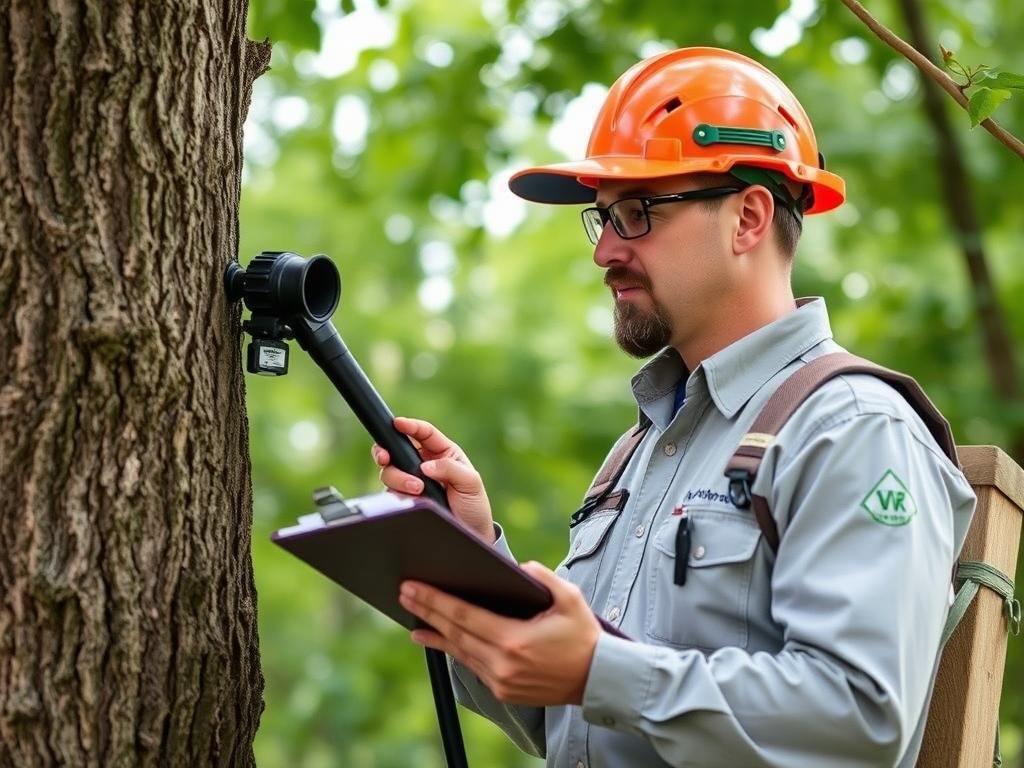
Look for companies with ISA Certified Arborists on staff. This credential indicates specialized knowledge and adherence to industry best practices. Certification requires extensive knowledge testing and ongoing education to maintain, ensuring your trees receive care based on current arboricultural science.
Insurance and Liability Coverage
Proper insurance protects both your property and your financial interests. Verify that any service you hire carries both general liability insurance and workers’ compensation coverage. Request certificates directly from their insurance provider rather than accepting copies that might be outdated.
Reputation and Reviews
Research potential providers through multiple channels including online reviews, Better Business Bureau ratings, and local references. The most valuable feedback often comes from neighbors whose properties have similar trees and conditions to yours.
Red Flags When Choosing Tree Services:
- Door-to-door solicitation, especially after storms
- Significantly lower estimates than competitors
- Reluctance to provide written estimates or insurance verification
- Recommendations for “topping” trees (a harmful practice rejected by arboriculture standards)
- Pressure tactics or requests for full payment upfront
Protect Your Property Value with Expert Care
Our ISA Certified Arborists provide comprehensive tree services designed to enhance and protect your landscape investment.
Frequently Asked Questions About Property Value Protection with Trees
Can a dead tree lower my home’s value?
Yes, dead trees significantly reduce property value in multiple ways. They create immediate safety concerns that can deter buyers, may be flagged during home inspections requiring remediation before sale, and detract from overall landscape aesthetics. Most real estate professionals recommend removing dead trees before listing a property.
How often should trees be professionally inspected?
For optimal property value protection, mature trees should be professionally inspected annually, with additional checks after severe weather events. Younger trees benefit from inspection every 2-3 years to ensure proper development. Regular inspection identifies issues before they affect tree health or property value.
Does homeowners insurance cover tree removal?
Most homeowners insurance policies cover tree removal only when the tree has fallen due to specific perils like wind or lightning and damaged an insured structure. Removal of standing dead trees, even if hazardous, is typically considered maintenance and not covered. Some insurers offer additional coverage options for preventative removal of hazardous trees.
Which trees add the most value to property?
Mature shade trees typically add the most value, with oak, maple, and elm species among the top performers. In residential settings, trees that reach 25-60 feet at maturity often provide the optimal balance of shade, aesthetics, and manageable maintenance. Regional factors significantly impact which species perform best in your specific location.
Are there trees that can decrease property value?
Yes, certain trees can negatively impact property value. These include invasive species that spread aggressively, trees with shallow, destructive root systems that damage foundations or utilities, and species prone to frequent disease or pest issues. Trees that drop excessive fruit, sap, or debris directly over living spaces can also deter buyers.
How much does professional tree care typically cost?
Professional tree maintenance typically costs 0-0 annually for basic care of 2-3 mature trees, including inspection and minor pruning. More extensive services like major pruning (0-0 per tree), disease treatment (0-
Frequently Asked Questions About Property Value Protection with Trees
Can a dead tree lower my home’s value?
Yes, dead trees significantly reduce property value in multiple ways. They create immediate safety concerns that can deter buyers, may be flagged during home inspections requiring remediation before sale, and detract from overall landscape aesthetics. Most real estate professionals recommend removing dead trees before listing a property.
How often should trees be professionally inspected?
For optimal property value protection, and how trees protect your property value your mature trees should be professionally inspected annually, with additional checks after severe weather events. Younger trees benefit from inspection every 2-3 years to ensure proper development. Regular inspection identifies issues before they affect tree health or property value.
Does homeowners insurance cover tree removal?
Most homeowners insurance policies cover tree removal only when the tree has fallen due to specific perils like wind or lightning and damaged an insured structure. Removal of standing dead trees, even if hazardous, is typically considered maintenance and not covered. Some insurers offer additional coverage options for preventative removal of hazardous trees.
Which trees add the most value to property?
Mature shade trees typically add the most value, with oak, maple, and elm species among the top performers. In residential settings, trees that reach 25-60 feet at maturity often provide the optimal balance of shade, aesthetics, and manageable maintenance. Regional factors significantly impact which species perform best in your specific location.
Are there trees that can decrease property value?
Yes, certain trees can negatively impact property value. These include invasive species that spread aggressively, trees with shallow, destructive root systems that damage foundations or utilities, and species prone to frequent disease or pest issues. Trees that drop excessive fruit, sap, or debris directly over living spaces can also deter buyers.
How much does professional tree care typically cost?
Professional tree maintenance typically costs $300-$700 annually for basic care of 2-3 mature trees, including inspection and minor pruning. More extensive services like major pruning ($350-$650 per tree), disease treatment ($400-$1,200), or removal ($750-$2,000) represent additional investments. These costs vary significantly based on tree size, condition, and local market rates.
What’s the difference between an arborist and a tree service?
An ISA Certified Arborist has demonstrated professional knowledge of tree biology, diagnosis, and proper care through examination and continuing education. While general tree services may handle basic cutting and removal, certified arborists provide science-based care focused on long-term tree health and property value protection. For valuable landscape trees, arborist expertise offers significant advantages.
Can I prune my trees myself to save money?
While minor pruning of small branches on young trees can be done by homeowners, significant pruning of mature trees should be left to professionals. Improper pruning can damage tree health, create hazardous conditions, and ultimately reduce property value. The cost of professional pruning is typically far less than the potential value loss from damaged trees.
How close should trees be planted to my house?
As a general rule, large shade trees should be planted at least 20 feet from structures, medium trees at least 15 feet, and small trees at least 10 feet. However, specific recommendations vary by species due to differences in root systems and mature canopy spread. Professional placement advice ensures trees enhance rather than threaten your property value.
What should I do if my neighbor’s tree threatens my property?
First, communicate your concerns to your neighbor directly and respectfully. If that doesn’t resolve the issue, document the hazardous condition with photos and a professional arborist’s assessment. Review your local ordinances regarding hazardous trees, as many municipalities have specific provisions. As a last resort, consult with an attorney specializing in property law about your options.
,200), or removal (0-,000) represent additional investments. These costs vary significantly based on tree size, condition, and local market rates.
What’s the difference between an arborist and a tree service?
An ISA Certified Arborist has demonstrated professional knowledge of tree biology, diagnosis, and proper care through examination and continuing education. While general tree services may handle basic cutting and removal, certified arborists provide science-based care focused on long-term tree health and property value protection. For valuable landscape trees, arborist expertise offers significant advantages.
Can I prune my trees myself to save money?
While minor pruning of small branches on young trees can be done by homeowners, significant pruning of mature trees should be left to professionals. Improper pruning can damage tree health, create hazardous conditions, and ultimately reduce property value. The cost of professional pruning is typically far less than the potential value loss from damaged trees.
How close should trees be planted to my house?
As a general rule, large shade trees should be planted at least 20 feet from structures, medium trees at least 15 feet, and small trees at least 10 feet. However, specific recommendations vary by species due to differences in root systems and mature canopy spread. Professional placement advice ensures trees enhance rather than threaten your property value.
What should I do if my neighbor’s tree threatens my property?
First, communicate your concerns to your neighbor directly and respectfully. If that doesn’t resolve the issue, document the hazardous condition with photos and a professional arborist’s assessment. Review your local ordinances regarding hazardous trees, as many municipalities have specific provisions. As a last resort, consult with an attorney specializing in property law about your options.
Protect Your Property Value with Professional Tree Care
Trees are living assets that actively contribute to your property’s market value and appeal. With proper care, they appreciate over time, providing financial returns through increased property value, energy savings, and enhanced quality of life. Professional tree services ensure these valuable assets remain healthy, safe, and beneficial for years to come.
Don’t wait until problems become visible—by then, they’ve often progressed to a point where treatment options are limited and expensive. Proactive care preserves both your trees and the property value they provide.
Your Trees Are Investments—Protect Them Wisely
Get A quote find a tree service and hire a pro with our easy matching service. Contact our certified arborists today for a comprehensive property assessment that identifies opportunities to protect and enhance your landscape value.